Hey all, another story with some help from my “guest author” – my dad, who left me a couple of stories that I’d convinced him to write before he passed away.  They’re rare because he printed them, before the computer they were stored on was stolen, so these are the only stories I have that he actually wrote.  I think that’s one of the reasons I’m doing my own writing – so my kids can see and read some of the stories that are part of their history and that they’ve heard over the years.

The other day I was watching the news, something I rarely do anymore, and it got me to thinking about relationships, and that got me to thinking of this next, actually, the third of the four stories that he wrote about his times in the Air Force.

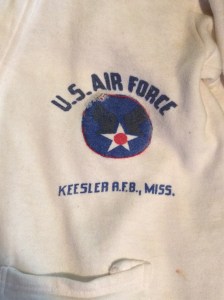
Dad’s sweatshirt from Keesler AFB, Mississippi

We have to travel back in time to about 1953, when my dad was in his early 20’s, in the Air Force, and just past basic training at Keesler AFB, in Mississippi, and had been in the technical training as a radio operator (and some things he wasn’t allowed to talk about) that formed the beginning of his career.  If we were to set the stage, we’d have to do so with the understanding that World War II was still very much in people’s minds, the Cold War between the former allies of the United States and the USSR was just ramping up, and the Korean War was in full swing.

Outside of the military, this was just before the whole civil rights thing really got underway, and being in basic training in Mississippi, things became apparent to my dad there that hadn’t been apparent where he’d grown up, in northern California.

At the time, the Air Force was training thousands of new recruits every month, on an assembly line basis at a quantity that was as mind numbing for the recruits as it was for those trying to train them.  While in the outside world (as in ‘Civilian life’) the color of your skin mattered a great deal, and there was prejudice at pretty high levels, especially in the south, inside the military, it didn’t seem to matter so much, as long as you could follow orders, and one day, dad, unaware of what life outside the airbase was like, found out just a touch of what prejudice was really like by seeing it firsthand.

So with that, let’s go to a hot August afternoon down at Keesler AFB in Biloxi, Mississippi, where my dad and his friend had some rare time off and wanted to leave the base for an afternoon at the movies.  They both left the base with thoughts of the movie, popcorn, and cokes on their minds.

They learned that they had to change their minds.  I’ll let dad tell the rest of the story, unedited, in his own words:

I had a friend down there.  His name was George, and I could see it was a really different experience for him than for me, for he was black and I was white.  I’ve never had that sort of a problem before.  We wanted to see a movie in our free time and I even said I’d pay for it.  We went downtown and went up to the ticket seller, and I offered to pay for the tickets.  She’d let me pay alright, but we couldn’t sit together because of the color problem, so we separated, and he sat in one row and I sat in the next one up.  When we got out of the movie I wanted to take him and buy him a coke, but we couldn’t even do that.  We never went downtown again, though we did keep in touch for several years.

And it got me thinking – I learned something from dad about what was important in friendships.  Years later my wife and I were invited to my friend Al’s wedding.  She’d grown up in a very segregated part of the country, and I hadn’t. (Dad, as mentioned above, had been in the Air Force and we’d been stationed all over the world.)  I had told her about Al, and I’d told her about his friend Oscar, who, with his looks (well north of six feet tall, black, sculpted shoulders, and the last time I saw him, shaved completely bald) was able to use his looks and physique to his advantage in his profession.

As we were heading for the wedding, she asked, trying to remember my description, “Now Oscar’s the black one, right?” –

And I realized that I hadn’t said anything about Al, and had to tell her, “Um, they’re both black, why?”

Where she grew up, things were different.

When she grew up there, things were different.

For me, I’d known Al and Oscar since junior high school, and – well, Al was Al, and Oscar was Oscar.

And the color of their skin didn’t matter a bit.


Well, it’s that time of year when the kids visit the grandparents back east, and it got me thinking of the year they did that and I had to do some rat sitting.

See, at the time, the only pets we could have that – well, that you could pet, that no one in the house had any weird allergic reaction to, were of all things, rats.

I know, I know… there’s big, ugly rats, and then there’s – well, small, icky rats… but somewhere in there there are pet rats – and they’re usually white with some spots on them, and we got one for our son, who absolutely adored her.

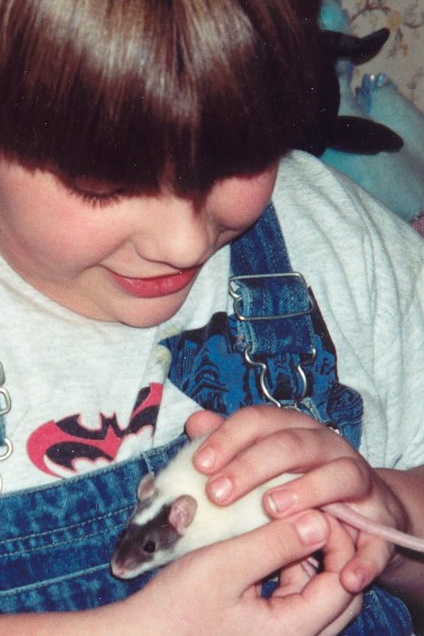
He called her Sonic, and after a while, she kind of grew on us.  We’d let her out of her cage for some time every day, closely supervised, of course, and she’d run around and we’d train her or play with her, and have fun with her.

One of the things she liked to do was sit on the arm of the couch and either watch me as I read a book, or watch as I worked on the laptop.  I’d have my right arm up on the arm of the couch, and she’d be there, just watching, and then invariably, she would decide that she needed to run across to the other side of the couch, where my wife or son was sitting.

But it’s what she did, EVERY time that eventually just got to me.  She’d run down my right arm, across my hands, and then off to wherever she was going that time. But the constant was that she would piddle on me on the way across the back of my hands, and it became a tremendous source of amusement for the rest of the family, while I was just kind of stewing… After even a little longer, I realized that I was upset, in large part because – well, she only “blessed” me with her piddling, and no one else.  You’d think it would be predictable, you’d think I’d be able to prevent it, but as regularly as it happened, she always figured out a way to make it *JUST* a little different, and I could never catch her without inadvertently propelling her straight up toward the ceiling.

Every time…

She wasn’t too hot on getting frequent flier miles, so I had to be extra careful.

At one point, I realized that the reason I was – well – “pissed off”, is because I was constantly getting pissed on. The evening I came to that conclusion pretty much brought the house down.

Sonic was a dear – if you can think of a rat as a ‘dear’ – to my son.  She gave him hours of amusement, companionship, and friendship, of the kind you can’t get anywhere else.  We learned from her, what exactly a “pack rat” was, because she would literally find things she was interested in, and put them in places only she knew about.

If she could, she’d run off with car keys because they jingled, but most often it would be a receipt, or a scrap of paper, or in the case of my son, she gave him new ways to come up with excuses for his teacher…

“Um… my rat ate my homework…”

And by golly, I saw her do it once, too – he was working on something, laying on the living room floor, with her and some papers, and she found this piece of full sized notebook paper, snagged it in her mouth, and jumped across the living room like she was Pepe Le Pew, and before we could catch her, she’d scampered under the couch, where at some point, she’d managed to chew a little hole so she could get at the INSIDE of the couch, where it was far more comfortable for her.

Right.

So one year, the family went back east to visit grandparents, and I had to stay home and work.  My job was to go to work, come home, let the rat out, play with her, feed her, clean the cage, etc…

No problem… she’s just a rat. I figured, in the immortal words of Jeremy Clarkson, “How hard can it be?

And… just as they find out on the show, Top Gear, where the quote comes from, I found out, precisely, how hard it could be.

So the night they were to leave, I took the family to the airport, where they flew on a redeye east, into what became the great power outage that gripped the East Coast that year (that’s another story, for another time) – and then I went home…

After I got home, it was late, she was fine, and everything was cool for a couple of days or so, but after one long day, I let her out, played with her a little, and then she, like oh so many females, decided to be coy.  She’d run out to see me, as if to say, “Come get me!” and then when I did, she’d run away… She wanted to be chased, she just didn’t want to be caught. (It’s funny, both Bill Cosby (in his Adam and Eve sketch, if you can find it) and Sir David Attenborough comment on this coyness, even though they’re referring to different species…)

Anyway, back to Sonic the rat, who decided, at that moment, to hide.

Not under the couch, IN the couch.

This was not good.

I tried getting her out.

I tried encouraging her to come out.

I got treats.

I got toys.

It didn’t matter.

She didn’t care.

What got me was that she just disappeared.  She had this penchant for chewing on things, (the couch being evidence of that) and I was well into what would become an 80 hour week at work at the time, so I didn’t have a whole lot of bandwidth to be thinking rationally about a rat that had gotten loose in the house.  I know, some people would have just trapped her, but she wasn’t taking any bait of any kind and since she was our pet, trapping was out of the question.

But making the inside of the couch uncomfortable wasn’t.

I took the cushions off and tossed them aside and started beating on what was left, yelling, making noise, and in general making the inside of the couch a pretty miserable place to be.  I wanted her to think that coming out of the inside of the couch would be a most excellent idea.

She had no ideas of the kind.

In fact, she was quite happy where she was, deep inside the couch.

This had to change.

So I started rolling the couch across the living room.

Understand, the couch had no wheels, which made rolling it – well – a bit different, but I did, truly, roll the couch, (thump, thump thump, across the living room.  It didn’t faze her at all.  In fact, I had to take a breather myself with the couch upside down and her ‘treasures’ from inside scattered all over the floor to listen to where she was.  While I was standing there looking at the it all, off to my right I saw her stagger out from under the couch…

… over to under the love seat, which apparently was her vacation home.

Well, given that rolling the couch had gotten her out of it, I figured that trying it again with the love seat would be just as effective, and so I took a couple of deep breaths and started rolling it across the living room, too.  To be honest, I was mad, I was tired, I had so much I had to do, and just didn’t have time for this, so that kind of narrowed my whole ability to creatively deal with the problem of her getting loose. However, she wasn’t interested in coming out, no matter what I was doing, and I was getting awfully tired, and while I wanted to make her uncomfortable enough to get her out of the couch, dang it, I liked her, and had no desire to hurt her.

After a few rolls across the living room, I figured we’d both had enough, and since I had a long day ahead of me the next day, I had to give up, so I put all the furniture back to where it had been, and went to bed, not sure what evilment she’d get herself into overnight.

I got up the next morning, and was sitting on the couch, already starting my day, when she warily poked  her head out from under the couch I was sitting on, wondering if Armageddon was over.  I reached out, picked her up, petted her (just a bit) and put her in her cage, where she stayed until the family got back.  She was fed and watered, the cage was cleaned, but for her safety and my sanity, it was better that way.

And it’s funny, looking back on it, – well, you’ve seen police shows or heard of reports where the police are called, and they determine that there was “evidence of a struggle.”  Had they stood on the front porch and listened, they would have thought, with the sound of the couch bashing its way across the living room­­, followed by the love seat doing the same, that there were two big guys really going at it in there, and that it was a life and death struggle.

Um… No… it was just me… and Sonic the Rat.

When the family got home, we (Sonic and I) were both glad to see them, but I think Sonic was really glad to see Michael.

We had her for about two years, loved her to pieces, and then she, bless her, went to Rat Heaven (I’m sure there is one.)

And even though I don’t miss getting piddled on, I do miss the little fuzzball that did it.


One of the things I’ve been doing in these stories is writing down history.  I’ve written down a number of stories about my dad and his time in the military.  There are others in the works, but I happened to run across a couple that I’d convinced him to write before he passed away.  They’re rare because he printed them, and then later the computer they were stored on was stolen, so these are the only stories I have that he actually wrote.  I think that’s one of the reasons I’m doing my own writing – so my kids can see and read some of the stories that are part of their history and that they’ve heard over the years.

I’ve been baking artisan bread for the last little while (bakers go back in the family for generations, and my son got me this book which has been absolutely wonderful).  So given that, the other day I was thinking about baking bread, and it got me to thinking of this next, actually, the second of the four stories that dad wrote about his times in the Air Force.

We have to travel back in time to about 1953, when my dad was in his early 20’s, in the Air Force, and just past basic training at Keesler AFB, in Mississippi, and into the technical training (radio operator and some things he wasn’t allowed to talk about) that formed the beginning of his career.  If we were to set the stage, we’d have to do so with the understanding that World War II was still very much in people’s minds, the Cold War between the former allies of the United States and the USSR was just ramping up, and the Korean War was in full swing. The Air Force was training thousands of new recruits every month, on an assembly line basis at a quantity that was as mind numbing for the recruits as it was for those trying to keep track of them, keep them busy, and keep them healthy.

These recruits were resources, and the Air Force had to take care of them by feeding them, giving them shelter, and keeping them occupied when they weren’t busy learning whatever the Air Force had decided they would learn.  On top of all the classes and mental training for the actual skills, there was the physical discipline that was taught by having the recruits do daily calisthenics, and the mental discipline that was accomplished by assigning daily tasks that were simply not optional.

So while they were taking classes in some of the most technical, and classified, jobs and skills available at the time, they were also to take care of themselves and each other in the most basic ways you can imagine.  There were assignments to clean the barracks, mow the lawns, maintain vehicles, buildings and property, and to scrub things till they shined. The person in charge of tasks like this was, in civilian terms, a manager.  In the military, he (at that time and in that place they were mostly “he’s”) was a Sergeant.  Very few recruits ever saw Generals.  All recruits saw Sergeants, and the Sergeant wore the hat of your mother, your father, your elementary through high school principals, your cop, and pastor, and occasionally, your bartender, all in one very crowded body, and your Sergeant could change hats faster than you could blink an eye, so staying on his good side was your greatest mission in life.

Make your Sergeant proud, he’d take care of you.  Embarrass him, and your life would be a living hell.  You would be cleaning bathroom floors with a toothbrush for a month – and it would likely be your own toothbrush you’d be doing it with.

From the Sergeant’s point of view, you’re a hands-on leader, and in the military, as anywhere, good leadership is the key to getting things done.  You depend on your soldiers (or sailors, or airmen, or Marines) to get the job done.

When things don’t get done, there are consequences.

Your job, as a Sergeant, is to make sure, beyond a shadow of a doubt, that those consequences are so unforgettable so that whatever caused them never, ever happens again.  At the same time, your job is to be in your soldier’s corner, letting them know you support them and will get them what they need to get the job they’ve been assigned done.

In doing that, you want to make sure that if they screwed something up, the screwup is fixed at your level and goes no higher.  You know that if a soldier ends up being called on the carpet in front of their commander, whether that’s a Sergeant or a general, there are only three acceptable answers to questions that might be asked, and those answers were simply, “Yes, Sir”, “No, Sir”, and “No Excuse, Sir.”

Three very important things here.

  1. You never wanted to have to be in a position ask those questions.  It meant something had gone wrong.
  2. You never, ever wanted to be in a position to have to answer those questions.  It meant that you hadn’t been able to fix whatever went wrong.
  3. You never, ever, ever wanted to have to give that last answer.   It meant you were the one who was responsible for whatever went wrong.  It was the equivalent of falling on your sword

And Sergeants, without whom there would simply be no military, were well known for coming up with creative ways of not falling on their swords, so to speak.  Some of the ways problems were “solved” were due to ingenuity borne out of the rare moments when you are faced with the only fate worse than death itself, having to say the dreaded words, “No Excuse, Sir.”

Occasionally, if the situation demanded, things were literally covered up.  This was only done as a last resort when everything else had failed.  It meant you were out of resources, out of supplies, or out of time.

This is important to remember.  The stress of running a huge kitchen like they had at training bases like Keesler was enormous, the time available to feed thousands of recruits was limited, so the kitchens had staff working around the clock preparing food for those three mealtimes when everything had to be ready to go, all at once.  Some in that staff were there full time, others were there as assigned.  This meant there were often people working there who didn’t really understand the significance of what they were doing.  (or not doing, as the case may be)

There were officers in charge of the entire operation, but it was the Mess Sergeant in charge who took care of day to day things in the Mess Hall. It was the Mess Sergeant in charge who made sure the kitchen ran with – well, military precision.  And it was the Mess Sergeant who did everything possible to eliminate all the variables he could, and make sure everything worked, so he could feed everyone coming through the door quickly, efficiently so they could go out and get trained to fight the enemy, whoever that was.

Under no circumstances did he want to stand in front of his commander uttering the words, “No Excuse, Sir”, so he instilled in his underlings a fear far worse than the fear of God; it was the fear of the Mess Sergeant.

So, there’s a lot of background to this story.  Take a deep breath, smell the smell of a big, industrial sized kitchen.  Here you can smell the vegetables being chopped up for the next lunch. Walk a little further, you can smell the aroma of freshly peeled potatoes for tomorrow morning’s hash browns, and hear the stories two young recruits are telling each other about anything but potatoes.  A little further, the steamy vapor coming out of an industrial sized dishwasher tickles your nose, and finally, a bit further on, you can smell the yeasty smell of bread dough rising, mixed with the smell of coffee and cigarettes, and above the constant roar of the fans, you hear a number of 20-somethings laughing and goofing off.

Around you are huge stoves, walk-in refrigerators and freezers, hand trucks to make moving the huge sacks of raw ingredients easier, enormous chromed ovens, and mixers that you could mix enough dough in to feed an – well – an Air Force.  Come with me as we stand off to the side and lean up against the wall and listen for a bit, as a much younger version of my dad tells the story behind a rather strange article that appeared in the paper that week.  It’s below, just as he wrote it.

We had a certain number of KP’s to do as we went through the technical training.  “Kitchen Police” is the full title of the job.  With so many trainees, we had a mess hall row.  Only one of the mess halls had a bakery, and even then I enjoyed the smell of fresh baked goods.   We were assigned to the midnight shift, and were supposed to make rolls.  Lots of them.  One of the KP’s got some flour that wasn’t the right kind of flour we needed and dumped it in the big mixer, then I was left to watch the dough rise while the rest of them had coffee break.  They had a super long break that night, and our KP pusher caught us goofing off. 

I told him it hadn’t risen enough yet.

He started sweating, a lot, for the mess sergeant was due in any time.

There was a growth of bushes separating the places where the men were marched in, so he had all of us KP’s dig holes for the large quantity of dough to be poured and hidden.  We went to work with a will and even covered the pile of dough with the sweepings.  There was a picture in the paper later of the finding of a giant puffball mushroom by the mess hall.

…and, in the inimitable words of Paul Harvey, now you know “The Rest of the Story


One of the things I’ve been doing in these stories is writing down history.  I’ve written down a number of stories about my dad and his time in the military.  There are others in the works, but I happened to run across a few I’d convinced him to write before he passed away.  They’re rare because he printed them, and then later the computer they were stored on was stolen, so there are only four stories I have that he actually wrote.  I think that’s one of the reasons I’m doing my own writing – so my kids can see and read some of the stories that are part of their history and that they’ve heard over the years.

So for today’s post, I’ll actually have a “guest writer” – this is actually kind of hard to write here, but I’m going to introduce you to my dad, Gary, who you may have read about here.

For this story, we have to travel back in time to about 1952, when my dad was about 21, in the Air Force, and not much past basic training.  Back then, in the military, if things didn’t fit their preconceived ideas of what was right, those things got fixed or removed.  It was understandable.  If you were in battle, you had to be 100% capable of doing whatever they told you to do, and if, for example, a toothache kept you from your post, and that post was overrun by your opponent because you weren’t there, then that tooth simply had to go, to save you, and potentially your unit. Dad had been through basic training, where, as with everyone, a lot of stuff got fixed.  But there were some things they decided needed to be removed, and in dad’s case, it was all of his teeth.  So they all came out, and were replaced with false ones.

At the time, dad was pretty close to the bottom of the ladder when it came to seniority, and in the military, there were enlisted men (and in those days, a few women), and there were officers.  In short, there were followers, and there were leaders.  The officers were the leaders, and the good ones took care of their followers.  As a result, there is a culture of respect and honor between the enlisted and the officers, and the enlisted always stood up and honored their officers with a salute, until the officer gave them permission to be “at ease”.  At the time, the lowest officer rank was a 2nd Lieutenant, with a brass bar about an inch long and 3/8ths of an inch wide showing the rank.  A 1st Lieutenant had the same bar, but silver, and a Captain had two silver ones, one beside the other.  They were known, at the time, as Captain’s tracks.

With that introduction, let’s enter a military Barracks, where dad’s sitting on his bunk, with a cigarette butt can in his hands that he was spitting blood into.  The following words are his – unedited.  This is the story of his…

…coming back to the barracks after having had my teeth pulled.  I’d had nine of them out that day and was feeling pretty poorly.   There was no one else in the building, and I heard him come in.  I felt quite self-conscious about having a butt can in my hands and making such a feeble attempt at coming to attention.  He was my commander. A young pilot just back from the fighting in Korea.  He wore the tracks of a captain and I accorded him that honor.  I was weak from shock and blood loss, and staggered as he came up to me.

He asked what the trouble was and I spoke through the rolls of cotton they had stuffed my mouth with telling him I was getting all my teeth out and had had nine done that day.  He looked at me with concern asking if he could do anything for me. 

I told him that a coke out of the next barracks would be heavenly. 

He turned and walked out the door, and came back a few seconds later with the frosty bottle in his hand.

I took the unopened bottle and put it on my jaws where I hurt and dug into my pocket to give him the money for it, but he didn’t want my money. 

He shipped out a week later and I heard he’d gotten killed in a plane crash.

His name was Lemmual Pierson.

I still owe him a dime.

I thought about that young man, my dad, less than half my age now, and that young Captain Pierson – not much older.  It’d be neat to find the family of Captain Pierson to thank them, and let them know how valuable a gift their father, and/or grandfather gave to my dad, a gift that was so valuable it paid dividends almost 60 years later.

Even if it only cost a dime.


This is a story about cars.

Well, more than just cars…

One complete car.

Parts of two others.

And me, who used the Infinite Teenage Wisdom ® I was so blessed with at the time.

Wait – a better way to describe “Infinite Teenage Wisdom ®” is “Stupidity beyond comprehension” – and before I get any notes from angry teenagers, read on, and see if you don’t see yourself in this –  (note: don’t try this at home – or, for that matter, anywhere else. )

So aside from me, the cars involved in today’s story were:

A 1965 Saab 95 – with a three cylinder, two stroke engine of a whopping 46 cubic inches. (for comparison: a standard Harley Davidson has almost twice that, about 80 cubic inches, across two cylinders).

A 1956 VW Bug (but mainly the engine – an original 1956, 36 horsepower, 4 cylinder, air cooled, ORIGINAL Bug engine)

And a 1972 Ford Ranchero, with a 390 Cubic inch V8 under the hood, with a 4 barrel carburetor, dual 2 ½ inch exhausts that made a barely passing attempt to muffle the roar of the engine.

It was said it could pass anything but a gas station, and I learned much later, how true this was.  Of course, this was back when I was irritated at gas costing a whole 66 cents a gallon, and refusing to buy it at that price…

The Ranchero belonged to my uncle, and I’d had some trouble with the Saab, the kind that had the engine sitting on the shop floor while we figured out how to drill a rather important broken bolt out of it.

This took a bit longer than expected, and I had to do something that evening, before we were able to get the engine back in the Saab.

You see, I was the cadet commander for the McChord Composite Squadron of Civil Air Patrol, and one of the things I did was teach the younger cadets about anything having to do with aviation, leadership, and in general being a good cadet.

One part of aviation is airplane engines, and so I figured, given that I was trying to restore a 1956 Bug, which happened to have an air-cooled engine of the same configuration as many airplane engines, I’d planned on using it to demonstrate to the younger cadets what an airplane engine might look like.

I’d been gathering parts for the Bug for some time, and had found, for $100.00, an absolutely bone stock, original, 36 horsepower engine actually out of another 1956 bug that had been in a front end collision.  With the gas tank in the front, the car burned, and was a total loss.  The only thing worth saving was the engine, so the owner had taken it out of the car and put it in a garage and there it sat for a couple of decades.  It still had the original distributor cap on the distributor, still turned over, and interestingly, still had oil in it.

To actually, run, it would need to be rebuilt, (the spark plug wires were a little crumbly from the heat of that fire) but you didn’t find engines like this very often, and I was absolutely thrilled to have it.

However, I’d planned on taking it to the Civil Air Patrol meeting in the back of the Saab, and the engine of that car was sitting on the floor of my uncle’s shop.

My uncle, bless him, offered to loan me his Ranchero.

Now understand, I was used to an engine with three cylinders the size of coke cans pulling me along.

The Ranchero’s engine had 8 cylinders the size of small Central American countries, and had about 7 times the power of the Saab.

In fact, let’s just say that the gas pedal on the Ranchero worked really, REALLY well.  In fact, it worked far, FAR better than the gas pedal of any car driven by a teenager should work.

And then there were the brakes.

Oh my gosh, it had disk brakes, 11 inch, Internally Ventilated, Power Assisted, Disk Brakes.

The ones I had in the Saab were little itty bitty drum brakes that I thought sucked – and it turned out I was right… only two of the four brake shoes on the front of that Saab actually worked at the time.

The difference was incredible.

I was used to a certain level of acceleration from the Saab (a speed rivaled by melting glaciers, I might add), and it became very obvious, very fast, that I would have to recalibrate my right foot for the increased acceleration available in the Ranchero.

What was not obvious was that I would have to do the same for the increased deceleration – but I’m getting ahead of myself.

I took the Ranchero home, backed it up to where the VW engine was and then just kind of stood there, trying to figure out how to get the engine up into the back of the thing.  Eventually I got some planks, and slid the engine up onto the bed on them, getting it into the back by myself, and with the engine loaded in the back, I shut the tailgate on the bottom and the canopy gate on the top.

By this time, what with the original problem with the Saab, plus the loading of the engine and such, by the time I put my Civil Air Patrol uniform on and got in the car, I was quite a bit later than I thought I would be, and so I did the rather typical teenage thing.

I tried to turn my uncle’s Ranchero into a time machine.

There was an 8 mile stretch of two lane road that I’d driven many, many times in the Saab, and with the acceleration that it had (imagine that under the hood are three hibernating squirrels (because of the glacier mentioned earlier)  who had NO intention of accelerating the car enough to pass someone that’s going too slow for an impatient teenage driver) I’d learned that if I were driving that Saab, there were only two or three spots on this 8 mile stretch that were actually safe to pass another car in. So my standard process, regardless of impatience, was to fade back from the car I was about to pass and wait until I had plenty of clear space in front of me and lots of clear space in the oncoming lane before I started to pass someone.

When the time was right, I’d floor it to get a running start, staying directly behind the person I was about to pass, because I needed the draft that their car pushing through the air provided to keep my speed up.   I’d then, at the last second, pull out and pass them, assuming everything was clear. If it wasn’t, or if I didn’t get enough speed up, or my timing was off and there was still oncoming traffic by the time I (the passer) got up to the person I was passing (the passee) I’d have to try to abort the pass, and with the brilliantly functional brakes (sarcasm intended) on the Saab, trying to abort a pass at that late stage could be a touch challenging.

I mean, by the time I got to the point of making the decision to pass, I’d be gaining on them at about 10-20 mph, and at the last moment, I faced one of two choices

  1. If there was still no oncoming traffic, I’d pull out and pass them.
  2. If there was oncoming traffic, I’d have to abort the pass, which would give me the following decisions: I could
    1. Rear end them (generally undesirable at that speed)
    2. Whip out into oncoming traffic and risk a head on collision…  (significantly less desirable at that speed) or
    3. Slam on the brakes and hope and pray that I had enough brake shoes making contact with brake drums to actually slow me down to keep from rear ending them.

So there I was, late… impatient as all getout… not in the underpowered Saab I was used to, but in this car that was not my own…

…that had more power under my right foot than I’d ever had in my life.

…that had more braking power than I’d ever had under my right foot in my life.

…and that had more rubber on the road in two of its four tires than I had on all four Saab tires.

Now just between you and me, I’m thinking this is a recipe for disaster, right?

Well, let’s find out…

I made it about 3 ½ miles from home, and on this road it didn’t (and still doesn’t) seem to matter what time of day you’re driving it, there will be someone who isn’t in nearly as much of a hurry as you are… In this case, I was stuck behind someone who insisted on going 50 mph (which was below speed limit).  I was late and impatient, and in my teenage mind, I just couldn’t take any of that, so I waited for a clear spot I’d used in the Saab, hit my blinkers, the gas pedal (oh… my…) and pulled out to pass.

Now one of the things to know about this road is that a lot of it is in shadow most of the day, with occasional little spots where there is sunshine.

I was in that sunshine, passing the car that was driving so slowly, and I was passing him like I’d never, ever passed a car before.

This time, I had room to pass.

This time, I was going way, way faster than the person I was passing.

This time, everything was going to end up just peachy.

I mean, what could possibly go wrong?

…which is when a bright flaming red 1974 VW Bug popped out of the shadows about a quarter of a mile ahead of me.

Understand…

Red…

Sunshine…

Bug…

There’s no radiator on the front of this thing, it’s all bright freaking red.

Like a stoplight.

And it didn’t look like it was a quarter of a mile away, it looked like it was a hundred yards away, and coming at me with a closing speed of about 130 miles an hour (figuring my 75 plus his 55).  I knew, in that moment that I had to do something, and do it quickly.

So I, using my Infinite Teenage Wisdom ®, did what would have made sense if I were driving the Saab, which would have been to stop badgering the hibernating squirrels under the hood and stand on the brake pedal, trying to avoid a head on collision.

But remember, I wasn’t driving the Saab.

I was driving the Ranchero.

And as I said, I was doing about 75 miles an hour – which is fast for that road, (impossible for that Saab) but is also a good passing speed for a short distance, and, well, let’s put it this way:

My body was driving the Ranchero.

My brain was still in Saab mode.

And with that big bright red Bug in front of me, I did the only thing I could possibly think of doing.

I hit those brakes.

…those 11 inch, Internally Ventilated, Power Assisted, Disk Brakes.

With, remember, more rubber on just the front wheels than the Saab had on all four.

The Ranchero went from 75 to about 45 like it had hit a brick wall.

The driver I was passing had to be confused beyond words, I mean, here’s this blur of a car roaring past him, not like he’s standing still, but like he’s going backwards.  He’s expecting to see tail lights any second, but what he saw were brake lights out the side window, the back of the Ranchero kicked up, the nose went down, and then it simply disappeared.

He looked around, and the next thing he knew, it was behind him again, weaving around a little bit, but definitely back there.

What the driver of that car didn’t know was that while the Ranchero had those huge brakes, the classic 36 horsepower 1956 VW Bug engine, the one with the original everything including the crumbly spark plug wires all the way down to the spark plugs, did not.

In fact, it decided to maintain its speed for about 8 feet, at which point it hit the front of the bed of the Ranchero.  It did this by rolling, yes, rolling to the front of the bed, where it sat, wounded and bleeding 25 year old dinosaur juice all over the bottom of the bed while I tried to swerve back into my lane so I didn’t end up squished between not one, but two VW engines (one from the red VW in front of me coming at me, and one from the wounded and bleeding engine behind me).

On top of it all, I was stunned, shocked, embarrassed, and furious at myself for not only not having thought this through, but for doing something so stupid in the first place, but there was nothing I could do but seethe as the person in front of me tootled along for the next 4 ½ miles, definitely below the speed limit.

You’d think I’d have learned my lesson, but remember, I  was operating under Infinite Teenage Wisdom ®, and I knew that when we got to the next intersection, I’d be able to turn left, onto a multi-lane road, and I’d be able to pass him.

Which is exactly what I set out to do when we got there.

The light turned green, the slow driver ahead of me turned left and went into the outside lane.  The rumble of the 390 in the Ranchero turned into a roar as I turned left, cut inside him, and floored it.

I heard all those cylinders firing, I heard the transmission whine, I heard those two exhausts roar, and I heard my 1956 VW Bug engine , its ability to travel completely lubricated now by all that ancient oil between it and the bed of the Ranchero, sliding, trying to make a hasty exit out the back.

Really.

I looked in the rear view mirror just in time to see it hit the closed tailgate and knock it open.

All I could imagine in that blink of an eye was the guy I’d just passed wondering why it hadn’t been enough for me to pass him like that, why he was now being passed by an old VW engine sliding down the road – without even a car attached to it.

I couldn’t let that happen, so with the image of the engine popping open both the top and bottom tailgates frozen in my mind, I remembered just enough of my physics, and did the only thing I could possibly do at the time.

I hit the brakes.

(Yes, those brakes)

Those 11 inch, Internally Ventilated, Power Assisted, Disk Brakes.

Attached to a veritable plantation of rubber…

…and the engine (the VW one) came rolling back to the front of the bed, where it lay, like a prize fighter down for the count.

I pulled over.

I just couldn’t drive any further right then, with the back open and the engine sitting there all cattywompus, so I got out and checked the tailgate.  It was fine.  I shut it to see if it would, actually, shut, (it did) but one look at the engine, and it was a mess.  The distributor cap was broken, the rotor inside the cap was broken, various important fan shroud pieces were now dented and mangled.

I opened the tailgate again and got up in the back, trying to keep myself from slipping or getting too oily in my clean uniform. I managed to manhandle the engine upright, (which is a challenge when you’re trying to keep your shoes and knees out of the oil on the ‘floor’ there – and an even harder challenge when you realize how very little room you have trying to stand up in the back of a Ranchero with a canopy on it). I pushed it all the way to the front of the bed, knowing that hitting the brakes would put it there anyway.  That oil coating the bottom of the bed now really changed things a bit, so I had to be extra careful, and I still had to get to the Civil Air Patrol meeting, where I’d be teaching the cadets about all the exciting things they could learn about aviation, and how important lubrication was in allowing metal parts to move past each other… freely.

Remember, I was the commander, and I was supposed to look sharp, and be calm, cool, and collected..  Having a greasy uniform wasn’t an option, so after getting the engine all upright and everything, I wiped my hands on the only thing available (the ground) and drove, very, VERY carefully out to McChord, to train my cadets.

They learned a little, and I managed to get myself, the Ranchero, and the VW engine home safely.

But I think, as I look back, I learned more.

I learned that impatience can be expensive, and dangerous.

I learned that otherwise intelligent people can do stupid things.

And the cadets, who looked up to me both figuratively and literally, had absolutely no idea, as leaderly as I looked, how fully capable I was of doing stupid things that would boggle their minds, and in my impatient attempt to get there on time, how close I came to not getting there at all.


Yesterday was the morning to end all mornings for a small Seattle spider.

She made the mistake of dropping into my coffee cup…

…and I didn’t notice her until I started pouring.

She was pretty excited there for a bit.

I suppose, for a Seattle spider, that’d be the way to go, drowning in coffee…


*The End Of The World As We Know It


July 4th

Here in America, it means there are lots of events involving fireworks.  Some of these things are legal, some are not.  Some can be made with good old Yankee ingenuity, and some can be made with a little bit of knowledge of chemistry.  There can be an astounding variation of things, but the bottom line is that they all explode, fly, or make lots of sparks.

And of course, if you do it right, they’ll do all three.

And the thing about my friend Jimi was that if there was any possible way that something could blow up, or fly, or make lots of sparks… he’d figure it out.  It seemed like “The Fourth” for Jimi was a day to celebrate everything – and he went all out on it.

One time – he and I had decided that the big Styrofoam gliders you could get would fly better if they were powered by something stronger than an arm, like, say, a rocket engine. So we found that there was one kind of thing, called a ‘ground bloom flower’ – that, if aimed correctly and taped securely to each Styrofoam wing on this glider, two of them might produce enough thrust to get it airborne.

It turns out that timing the ignition of these things was a pretty major challenge – and that the concept of asymmetrical thrust – that is – one of these things lighting before the other – was not theoretical at all, and the plane, when we did manage to get it in the air, didn’t fly so much as spend its time trying to do a very colorful pirouette to one side, followed by a lurch forward for the split second both “engines” were firing at the same time, followed by a feeble attempt at another very colorful pirouette to the other side as the first engine died and second one lit off.

Was it entertaining?

Heck yes.

Did it fly well?

Uh…. No.

It’s safe to say that it really didn’t fly very well.

It’s also well to say that it wasn’t very safe, at all…

I mean, a highly flammable object, that’s already got a totally unpredictable flight path, combined with devices that are already spewing sparks and flames…

What could possibly go wrong?

<ahem>

In our misguided attempt to actually get the thing to fly, we kept fiddling, and finally got things set so we could try again – and found that where the fuse came out of the ‘ground bloom flower’ wasn’t exactly where the fire and thrust came out.

We were able to deduce this by the large hole the flame had burned in the right wing.  We taped over that and decided a single producer of thrust would work better if we could center it.

So we – after long and hard thinking of all the things that would be illegal to purchase and let fly in Shoreline (where Jimi lived), we realized that model rocket engines would be perfect (and legal) – and bought a few of those, made a self-ejecting holder out of some ductape, stuck a fuse into the engine, lit it, and threw the plane, figuring it’d fly, gracefully, as it should.

Turns out that adding that much thrust to one of those things doesn’t necessarily improve anything in a predictable way – and after even more fiddling, the first one that actually flew did a very tight loop, hit some wires, and came down hard, mostly in one piece.

The next one was a little better, but it was the last one, that I didn’t see, that was clearly the best.

I’d just run into the house to get something, when I heard the rocket engine fire, and I heard Jimi yell.  I heard a thump, the rocket continued to burn, and Jimi laughing like an absolute lunatic.

By the time I got out there, tears were running down his face, he was holding his stomach, and having trouble deciding whether to laugh or breathe.

I looked around and followed the smoke to the hood of his car.  It seems the engine had burned itself out by then – the smoke more of a haze at that point – but before it had done that, the little rocket engine had pushed the plane up high enough so that one wing had hit a telephone wire again.  That spun the plane around 180 degrees, pointed right at the ground. It came down at full power, almost pulled up, but hit and bounced on the hood of Jimi’s little Chevy Nova, getting the nose stuck under one of the windshield wipers.  The little engine that could wasn’t done yet, and continued to burn with the plane trapped by those windshield wipers – finally ending up burning the paint off part of the hood of the car.

Jimi was just beside himself.

I was mortified, and thought that he’d have to figure out how to explain that to the insurance company, but he just wanted to leave it the way it was.  The scorched metal, the blistered paint, was worth far more as a story to him than getting a new hood put on the car ever was.

I’ll always remember that laugh of his – and how much it meant to just hear that childlike joy.

It’s funny – Jimi and I were so much like kids in all of that that neither he, an award winning photographer who never went anywhere without his Olympus cameras, nor I, a budding photojournalist who never went anywhere without my Nikons, took any pictures of the event.

We just laughed and laughed and laughed.

And some memories are best left there, in your mind, as a memory that remains strong, and bright.

I miss him.

For now, just imagine the intense hiss of a model rocket engine, the hollow metallic thunk of some hard Styrofoam on a metal hood, and the sound of two grown men laughing like the little boys that were still very much alive inside us.

Those little boys who had read all the small print on the fireworks and rocket engines… “Use under adult supervision…”

Yeah, we supervised alright.

It was a good day.

Years later, in Jimi’s memory, I decided it was time to share that joy of Styrofoam airplanes, rocket engines, and some adults who still remembered what it was like to be a kid with my son, but that’ll be a story (complete with pictures) for another time.

Have a safe Fourth of July, folks.


Hey all – I’m back.  I’ve been off, away from my writing – and away from a lot of other stuff – for a bit – learning some pretty important lessons about dodging bullets (or maybe, as my son says, angry meteors) – and have been learning about family, how important it is, and how important it is to take care of each other.

I’ve been on the receiving end of a lot of that recently – and got to thinking about how much I’m looking forward to “graduating” from needing that. I’ll write more about some of those lessons – but it’ll take some time for them to simmer a bit, or bake a bit, or do whatever lessons do when they start roaming around in my noggin.

But back to that graduation thing…

Several friends, or children of friends, have just recently graduated from various parts of their lives – some from high school, some from college, a couple from Boy Scouts (they made Eagle) – and it got me thinking about when I graduated from college…

<play along with me here – fade to black – and then come back to a much younger and thinner me…>

When I went to college, I found, to my surprise, the little bit of photography I’d been dabbling in was something other people thought I was good at.

Also to my surprise, I did not know at the time that you could schedule classes in college to NOT start at the hour when God Himself hadn’t yet thought of making coffee, but sure enough, my very first class started at 7:30 in the morning.  It was called “Media Production” – where we were to learn about making slide presentations…

(using real film – none of this fancy digital crap you have now– that we had to expose, and to develop the film, by hand, we had to walk two miles, uphill, in snow 10 feet deep, and – no, wait… wrong story… sorry – my “old codger” dial was set a little too high there… that’s been fixed, and we now return you to the regularly scheduled story, already in progress…)

…and the final project would be a presentation of both slides (images) and music that we’d made on our own.  About half way through the course, the instructor interrupted our work on our presentations with a message from the editor of the yearbook.  I was standing up front between two young ladies who also didn’t get that memo that you didn’t have to take classes before God finished grinding His coffee beans.

The message from the editor of the yearbook was simple: They were backed up with assignments, and desperately needed help in photography, and our instructor wanted to know if any of us wanted to volunteer to help them out.

At that moment, I felt one firm hand on each shoulder push me a step forward.

The two young ladies, bless their fuzzy little hearts, had “volunteered” me.

I asked about the requirements.

“You need to have a camera.”

“I don’t have one.”

I didn’t. I was borrowing the school’s old Nikon FE for this class.

“You need to have darkroom experience.”

“What’s a darkroom?”

My experience in dark rooms was limited to turning the lights off.

And thus started my ‘career’ in photography.

I spent an astonishing amount of time in the darkroom the first few weeks, learning how to mix chemicals, how to develop film properly (in large part because I developed it improperly first), how to print pictures well, (in large part because I printed some absolutely awful images). Lordy… talk about making mistakes – but I was learning, and learning things like to how to tell when the water was exactly 68 degrees (which is the temperature most developer had to be for film to be developed) – all the stuff you don’t even see anymore because it’s all digital, but it was magic, and I loved it.

So much of the learning how to do it right was learned by screwing it up first, and doing it wrong, first, and eventually developing (pardon the pun) the experience to build on over time so I wouldn’t make those mistakes again…

I shot for, and later became the photo editor for the yearbook “Cascade”, and did the same for the student newspaper, “The Falcon.”

By the time I graduated, I’d been shooting at SPU for two years, to the point where I’d gotten to know everyone from the president of the school to the head custodian.  I learned what time the light was good on which buildings – and which season was best to shoot them in. I’d shot from the roofs of building you weren’t supposed to be able to get to (Knowing the president of the school does not get you onto roofs of buildings… Knowing the head custodian does – funny how that works) – and I went everywhere – and I mean *everywhere* with my camera bag and my two Nikons and assorted lenses.

I took my camera bag with me everywhere, except for one night, when I went up from the darkroom (in one building) to get something I’d forgotten in my dorm room (most of the way across campus and up a steep hill).  I just left the bag in the darkroom, behind two locked doors, and walked up to the dorm quickly – but feeling very strange and off balance since my camera and bag had become such a part of me.  In fact, it became clear to me that I wasn’t the only one used to seeing me with it.  One person I passed that evening seemed totally startled by the fact that I was there and blurted out, “Tom? – is it really you? I didn’t recognize you without your camera bag!”

And that little comment followed me all the way to the day I graduated from Seattle Pacific University.

In fact, one day, while on the roof of one of the dorms, taking pictures from an angle no one else had thought to take pictures from, I saw a friend walk by below who’d complained about me being “everywhere” – popping out from behind bushes and the like, and the situation was just too ripe… I mean, if there was ever an example of low hanging fruit  – this was fruit just ripe for the picking – even if I was doing it from the top of Marston Hall at SPU.  I leaned over the edge, focused on him, took the picture, and then ducked back onto the roof, “leaving” the camera hanging over the edge just long enough for him to look up on hearing the sound of my motor drive and to see it being pulled back.  I waited about 10 seconds, then peeked over the edge and waved.  He was standing there, mouth open, staring at me, his suspicions confirmed, that I was indeed, “everywhere.”

The funny thing about that was that, like I said, everyone was used to seeing me with my camera bag, and conversely, people quite literally didn’t recognize me without it.  But this meant that I became, for lack of a better way to say it, a fixture, with my cameras, all over the place.  Most, if not all of the faculty had gotten to know me in one form or another, and so when it was clear that my time at SPU was coming to a close (in large part because I was graduating) a thought, nay, an idea started germinating in the dark, developer soaked recesses of my mind.

See, if everyone knew me with the camera bag, and I walked across the stage to get my diploma with it, there’d be a couple of laughs, or worse, no one would notice at all, it was just “oh, that’s Tom, with the camera bag” – and I’d be done.

Hmm…. Unacceptable.

If I just walked across the stage with nothing, that would have the same effect…

Nothing.

I’d just be an anonymous graduate who had 4 people in the audience cheering him on, and that would be that.

Also unacceptable.

After all I’d done, after all the pictures I’d taken, the memories I’d captured, the treasures I’d seen and shared through my cameras, I wanted something *just* a touch bigger.

So I started thinking, and that idea started festering into thoughts like:

“What would the faculty *not* expect?”

“What would the students *not* expect?”

“What would the audience *not* expect?”

…and what could I do that would make them remember that it was me who walked across the stage, and not some other student?

And then, as if by magic, the day before graduation, I got a surprisingly big paycheck, and I bought a motor drive for my Nikon F-3, the best camera out there at the time.  This motor drive would let me burn through a roll of film (36 frames) in about 8 seconds But I also bought myself what was then known as an SB-16 – or a “Speedlight” – think of it as a flash for the camera, on Tour de France levels of steroids.  It would keep up with the motor drive for about 6 frames if you set it right, and I found myself pondering what I could do with that combination.

I didn’t have to ponder long.

If carrying the camera bag across the stage was out…

And carrying nothing across the stage was out…

What about…

…and so, I managed to conceal, under my gown, my Nikon F3, the MD-4 Motor Drive, and the SB-16 Speedlight.  I put a set of fresh batteries in both the flash and the motor drive, threw my standard 50 mm lens on the camera, slung it over my shoulder, put the gown on over it, and set the whole thing “just so” so that it would hang without putting too many bulges in the wrong places.

One of the things I’d learned over the years was to hang the camera over my right shoulder, and hang it there with the lens facing my body.  That way, the lens was protected, and if there was a shot I needed to take quickly, I could reach down with my right hand, grab the side of the camera that held the shutter release, whip it up, and have my left hand ready to hold the lens while the right held the camera body.

Having the SB-16 on there kind of nixed that idea, since the flash would have been rather uncomfortably in my armpit, even with the long camera strap I had. So I had to hang it with the lens facing out, then when I was ready to go, twist it around so I had my right hand on the camera where it needed to be.  Given what I was doing, this had an unintended effect, namely that all the little blinky lights on the back of this new strobe were now facing outward.

None of the students could see this, but as I was standing there on stage, waiting to cross the stage, having handed the little card with my name on it to the Vice President of Academic Affairs (the guy who read my name for everyone to hear), the camera, the motor drive, and the strobe unit together made for a large, blackish object just under a foot and a half tall, bulging at my shoulder, with little blinking lights.

And several of the faculty, sitting on the stage, saw me reach for it and turn it around.

I saw their movement, and looked right to see tittering wave of comments and concern rippling as more and more of the faculty’s eyes focused on the blinky lights and the bulge under this one student’s gown.

Before I could react, and before anyone else could say anything, I heard my name called, and things simultaneously went into slow motion, tunnel vision, and I felt like I was hearing everything underwater.

When I looked back, I saw the school president, Dr. Dave LeShana smiling, saw the look of expectation in his eyes, the diploma in his hand. I saw the orchestra, and my friends in it, playing quietly, or watching, as their parts dictated.  Past them a bit, I saw the photographer, waiting to take a picture as I shook the president’s hand, and I did what I’d just rehearsed in my mind a few seconds before: six steps out, pivot on the right foot, the seventh step, face the audience, bring the camera and flash out, (it did have film in it, for later) flip the top of the flash down (it was aimed straight up) – and then I fired the camera out at the audience until the flash stopped flashing.

Stunned Silence.

A pin, dropped on a carpeted floor would have echoed in there.

I waved at the crowd, then looked over at president LeShana, who started laughing, and I shook his hand.  I held on for a bit, waiting to see the flash of the photographer who was supposed to be shooting *my* picture, and saw nothing.  I let go of the handshake, and looked down at the photographer, who was just staring, rather dumbfounded.  I realized that I had significantly more – um – firepower – photographically speaking, than he did, and he was just shocked into silence and inaction.

Not wanting to hold up the ceremony any longer, I walked past him, got to the stairs that got me off the stage, and as I took my first step down, my ears seemed to start working again and I heard the crowd, the students, on their feet, cheering and screaming.

Heh…

I high-fived a bunch of them as I walked past.

Yeah, that was better than just taking the camera bag across the stage.

==

Years later I heard from my sister, who’d been there.  She’d talked to the fellow who was the student body president, who’d been sitting in the 4th balcony.

“Was that your brother who shot graduation?”

“He didn’t shoot it, he graduated.”

“No, I mean, he graduated – but he took pictures, from the stage, didn’t he?”

(Given that everyone else was taking pictures aiming toward the stage, this was notably different)

“Oh, yeah, that was him, why, did you see him?”

“Oh I saw him alright… I was watching him. Through binoculars.  And every time that flash went off was like being hit in the eyes with a sledgehammer.”

Heh… yeah… it was different than the standard, run-of-the-mill trip across the stage.

…though I sure would have liked it had the photographer gotten a shot of Dr. LeShana and me.

So… gosh, do I have a message for those of you out there graduating?

I hadn’t planned on one – but hey, since we’re here, there’s actually quite a few of them…

You won’t have all the answers when you graduate.

You’ve barely learned to ask the questions.

I learned a lot more after that day, but the thing that had me thinking was this:

I took risks.

I made the best decisions I could make while working with incomplete information, and as much as you tend to look back and think thoughts like “if only I’d…” – those thoughts are useless without a time machine to go back and prove that your “if only…” would have been the right decision.

I climbed tall buildings (not in a single bound, mind you, and always with permission – though there’s a certain church roof I’ll never climb up again with or without permission, that was just scary high, and steep) –

I did things “just because” – and I had a blast doing it.

On the other hand, I was so poor afterwards as I was starting out that there were a lot of things I didn’t do.  I learned to make a big can of oatmeal (that cost me $2.86) last a month.  I remember inviting friends over for lunch – and it was boxed Mac and cheese that I’d gotten for a quarter.

And it was fun.

Would I put all that hard work into it again?

In a heartbeat.

Looking back on it all now…

Did life go the way I’d planned?

Nope.  Not even close.

Would I change anything, looking back on it now?

That would involve that time machine again, proving that whatever decisions got me to this point were the absolute right or wrong ones to be made – and remember the bit about making the best decisions you can with the info you’ve got at the time?

Some parts that have happened were better than I could have possibly imagined in my wildest dreams.

Some parts that have happened were worse than I could have possibly imagined in my worst nightmares.

That’s called life…

Remember the good.

Learn from the bad.

Do the best you can, with what you’ve got, at that time, and you build on that.

When you look back, you’ll see you made mistakes.

Some of those mistakes will have been small, but as you look back, you’ll see you made some huge ones.

But look harder, and you’ll realize you’ve learned a lot of lessons from those mistakes…

And after you learned those lessons, I’ll bet you didn’t make those mistakes again – or as much (because you now had *new* and *exciting* and *bigger* mistakes to learn from!)

And sometimes, even when you think you finally have it all together, and you’ll have some sort of picture, symbolizing all the lessons you learned, something will invariably go wrong (like, say, photographers at graduation not taking pictures of the graduating students…) and the only thing you’ll have are the memories.

So… learn what you can.

Learn from those mistakes.

Forgive yourself for making them.

And move on, teaching those who come behind you as you can.

Take care folks…


 I had to have a meeting with the head of security at work last week.

In his office…

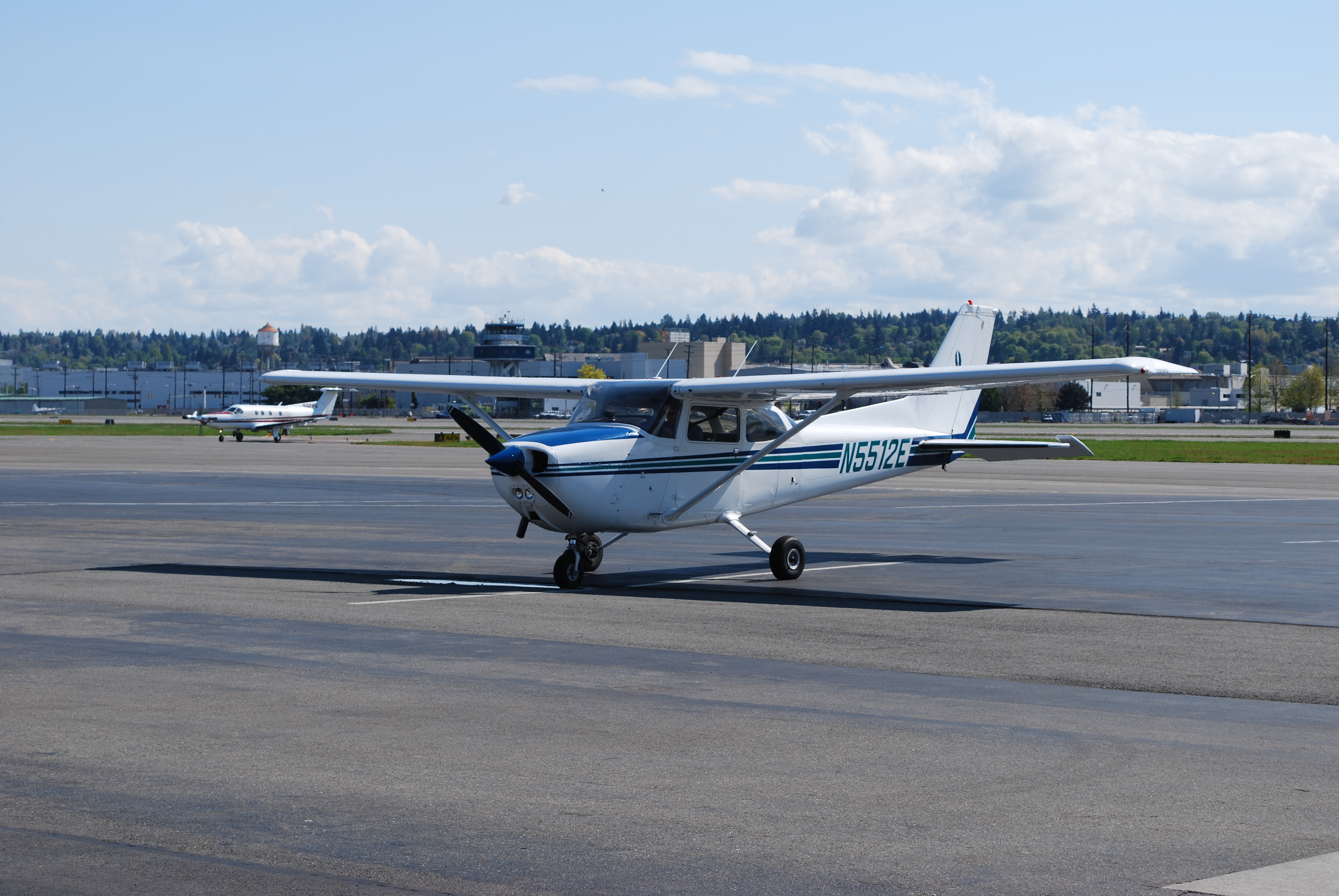
We decided to get some fresh air while we were doing it.

And some scenery…

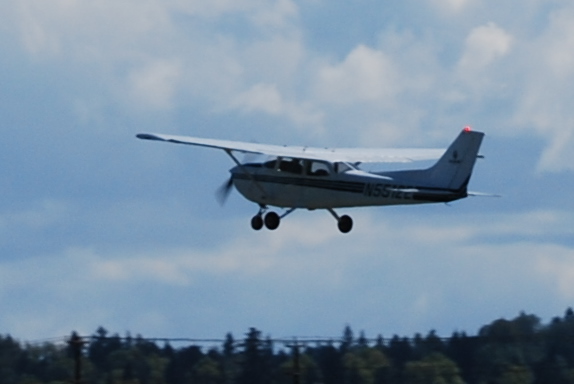
He let me lead the meeting for a bit while he was researching some stuff – (full frame shot there)

And I didn’t have to use the barf bag at all – (though I was sure thinking about it – seems the resonant frequency of my tummy means 120 mph isn’t a good thing… 90 mph works fine.

Finally it was time to call the meeting to a close…

And I sat in the airport lobby for awhile – just letting my tummy settle down – it was good to let that happen.

It was fun – too much other stuff going on – I simply had to take the day off to try to decompress.

Take care folks –

Tom


No story this week.

I honestly just don’t have it in me.

It’s been a week of highs

  • I went flying with a friend
  • I had an “Only you, Tom, only you…” experience when researching a story I was writing – where the pieces came together in ways I’d never expected.
  • My leg, which wasn’t supposed to heal after all that’s been done to it (think radiation, etc), appears to be doing just that, healing…

And lows

A triple whammy of

  • my grandma being in the hospital,
  • the same hospital I spent countless hours in when my dad was there 11 years ago, (which I simply can’t face right now)
  • and rather suddenly and unexpectedly losing her leg, something I’m kind of familiar with having to face, because that was a possibility for me a number of years ago – to the point that early on the morning of surgery, dressed in the sweats I was supposed to wear to the hospital, I walked around our dandelion covered front lawn in my bare feet, to try to cement the memory of what it felt like to walk barefoot in wet grass deep into my brain, in case I wouldn’t have the chance to feel that anymore.…

I’m also hearing stories of my uncle’s health in Germany – obviously nothing I can do about that – but it hurts, realizing that people will leave your life – to live on in your memories – it’s just the transition that’s so hard.

A year ago I wrote a note to my grandma – put it in an envelope, and sent it to her.  It was all the things I’d ever wanted to say to her, but simply didn’t have the time to do.

I made the time – and told her that the little green toolkit she gave me for Christmas 30 years ago still has an honored position in my toolbox, that I could never develop pictures or spend time in the darkroom without thinking of her – she’d given them to me – they were my grandfather’s.

This is the grandma who sent me the chocolate chip cookies she’s packed in real, live popcorn – I wrote a story that mentioned that.

I told her that in the letter.  We were going to talk about it – but haven’t yet.  At least I wrote it, at least I was able to say the goodbye I needed to say if it came to that.

So while I’m hoping, and praying for my grandma’s health, I know I have to brace myself for the final letting go – and of course, I’m not ready for that.

So… No story this week.  Just trying to figure out how to deal with life right now.  Thoughts and prayers are appreciated.

Love the folks you’ve got – you never know when they’ll be taken away.

Take care folks,

Tom

Tom Roush

Archives